
This choice affects more than comfort. It shapes your energy bills, your home's look, and how much upkeep you're signing up for. In dry, high-sun states like Utah, the stakes are even higher.
This guide breaks down blinds versus window film across cost, performance, and everyday livability, so you can pick with confidence instead of guessing.
Key Takeaways
- Blinds give full, on-demand light and privacy control, but need regular dusting.
- Window film blocks heat and UV around the clock with far less maintenance.
- Climate, budget, and view preferences decide which sun-control option fits best.
- Combining both delivers passive protection plus adjustable privacy, a growing trend.
- Utah's intense sun drives up heat gain costs; a home energy audit finds the best fix.
Blinds vs Window Film: Quick Comparison
Cost & Installation
Blinds come in a wide price range, from budget vinyl slats to premium wood or faux wood sets. Most styles are simple enough for a weekend DIY install.
Window film costs less per window than blinds in many cases, but the material itself isn't the whole story. Installation quality matters just as much as price—a rushed DIY job often leaves bubbles, peeling edges, or uneven tint.
That's why professional installers like Greenify Energy Savers handle the application for Utah homeowners who want it done right the first time. Film is also a one-time purchase: once it's on the glass, there's nothing to buy again for years.
Light & Privacy Control
Blinds let you tilt slats or close them completely, giving you privacy on demand, whether it's noon or midnight.
Window film works differently. Reflective and frosted films provide constant daytime privacy, but they don't adjust. What you see is what you get, day or night.
Heat & UV Protection
Blinds only block sun when they're closed, and even then, gaps between slats let UV rays sneak through.
Window film protects continuously. 3M's residential film line is designed to block up to 99% of the sun's harmful UV rays, according to the manufacturer's 2020 residential film infographic, regardless of whether anyone remembers to lower a shade.
Maintenance & Durability
Blinds collect dust between slats and need regular wiping. Cords and hinges can wear out, and slats bend with rough handling.
Film is wiped clean during your normal window cleaning routine. Madico, a major film manufacturer, notes in its 2021 guide to window film lifespan that quality residential film can last 20 years or more under optimal conditions, though real-world lifespan depends on sun exposure, glass orientation, and installation quality.

What Are Blinds?
Blinds are adjustable, slat-based window coverings made from wood, faux wood, aluminum, or vinyl. They've stayed popular for one simple reason: you control exactly how much light enters a room, whenever you want.
That flexibility matters most in:
- Bedrooms: full blackout at night, open light in the morning
- Home offices: reducing screen glare during video calls
- Media rooms: dimming light without shutting a door
Style Variations Worth Knowing
Not all blinds behave the same way:
- Vertical blinds: best for sliding doors and oversized windows
- Horizontal/venetian blinds: classic option for standard windows
- Roller blinds: clean, minimalist look with no visible slats
- Cellular shades: honeycomb design that adds insulation value
Safety matters too. Following updated ANSI/WCMA cordless requirements that took effect in June 2024, cordless and motorized blinds have become the standard recommendation for households with young children or pets.
Where Blinds Work Best
Blinds shine in rooms that need frequent light changes throughout the day, plus spaces where a traditional, layered look is part of the design goal. They're less effective in rooms with hours of direct, intense sun, since even closed slats leave small gaps where heat and UV still creep in.
What Is Window Film?
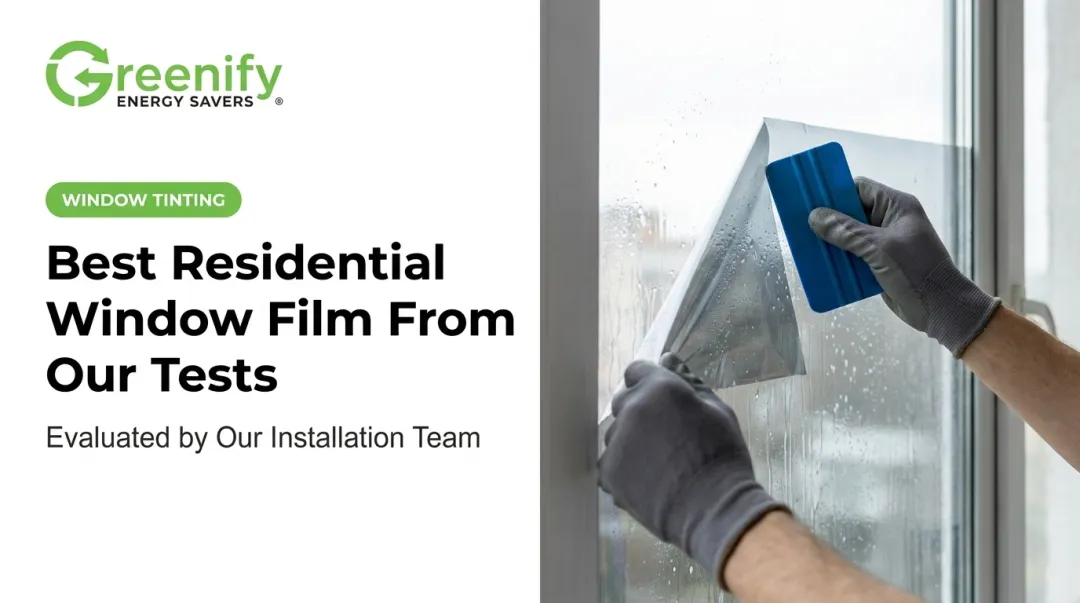
Window film is a thin, adhesive polyester layer applied directly to your glass. It filters heat, light, and UV rays without blocking your view, unlike blinds or curtains.
Its biggest advantage is passive protection. Film works 24/7, whether you're home or not, easing the load on your HVAC system.
Solar Gard, a major film manufacturer, states that residential solar-control film can cut cooling costs by as much as 30%, based on case studies of Florida homes. Results vary by climate and window setup, but less heat in means less strain on your cooling system.
Film Types to Consider
- Solar control film — general-purpose heat and glare reduction
- Ceramic film — high heat rejection without a reflective look
- Low-E film — mimics energy-efficient glass coatings
- Frosted/decorative film — privacy without darkening the room
- Safety/security laminate — adds shatter resistance to glass

Film is one piece of a larger energy-efficiency puzzle. Paired with energy-efficient window replacement or attic insulation, it can meaningfully reduce a home's cooling load, especially in homes with aging single-pane glass or minimal attic insulation.
Many Utah homeowners find that upgrading windows first, then adding film to south-facing rooms, delivers the fastest payback. That whole-home approach is exactly what Greenify Energy Savers walks homeowners through, starting with a home energy audit.
Where Window Film Works Best
Film performs best on south- and west-facing windows, where sun exposure is longest and most intense. It's also a strong fit for rooms with furniture or flooring prone to fading, or spaces where screen glare is a daily annoyance.
Independent testing on LLumar's DR15 SR CDF film shows a 78% total solar energy rejection rating with a 0.22 solar heat gain coefficient on clear 1/8-inch glass, according to LLumar's 2025 performance data. That's a meaningful chunk of solar heat blocked before it ever reaches your living room.
Blinds vs Window Film: Which Is Better for Your Home?
The right choice depends on how you weigh five factors:
- Adjustability: Do you need to change privacy levels throughout the day?
- Budget: Are you comparing upfront cost or long-term value?
- View preservation: Does keeping an unobstructed window matter to you?
- Maintenance tolerance: How much upkeep are you willing to handle?
- Climate exposure: How intense and prolonged is the sun hitting your windows?
Choose blinds if fully adjustable blackout and a traditional interior look are your top priorities. Choose window film if passive, continuous heat and UV control with unobstructed views matter more.
Plenty of homeowners skip the either/or decision entirely. Layering film for constant protection with minimalist blinds or shades for occasional full privacy has become a popular design approach. It makes practical sense in a state like Utah, where dry heat and long summer sun exposure make passive solutions especially valuable.
Real-World Example: Solving Solar Heat Gain in a Utah Home
Picture a common scenario: a homeowner with large west-facing windows whose living room turns uncomfortably warm every afternoon, and whose hardwood floor is starting to fade near the glass.
The decision usually comes down to three paths:
- Add blinds for a lower upfront cost, but accept manual daily adjustment
- Apply window film for continuous heat and UV reduction without losing the view
- Replace the windows entirely if the existing glass is old, single-pane, or failing
A 2012 IWFA-commissioned simulation found that film delivered the strongest return on existing single-pane homes, generating more than two units of energy savings per $100 spent, compared to weaker returns on newer, already-efficient construction. That's a useful data point: the older your windows, the more a passive fix like film tends to pay off.
This is exactly the kind of tradeoff a whole-home energy assessment is built to sort out.
Rather than guessing, Greenify Energy Savers' assessment includes a blower door test, thermal imaging, attic and insulation review, and a window inspection. The results give homeowners a clear picture of whether film, replacement windows, insulation, or a combination delivers the best return for their specific house.

Conclusion
There's no universal winner between blinds and window film. It comes down to how much you value adjustability, an unobstructed view, and passive, round-the-clock protection.
Whichever direction you lean, the outcome you're really after is the same: lower energy bills, protected furniture and flooring, and a home that stays comfortable through Utah's hottest months.
If you're weighing the bigger picture, whether that's film, insulation, or window replacement, a professional whole-home assessment from Greenify Energy Savers can pinpoint which combination delivers the best long-term value for your home.
Frequently Asked Questions
Which is better: blinds or window film?
It depends on your priorities. Blinds win if you want fully adjustable privacy and blackout control. Window film wins if you want continuous passive heat and UV protection with an unobstructed view.
Do I need window film if I have shades?
Shades only protect your home when they're closed. Film works around the clock, so pairing both gives you more complete, continuous coverage.
What is the new trend for window coverings?
Homeowners are increasingly layering window film with minimalist blinds or shades. This combines passive efficiency with the flexibility of adjustable privacy.
Can you use window film and blinds together?
Yes, this is a popular combination. Film handles constant heat and UV rejection, while blinds add on-demand privacy and blackout when you need it.
How long does window film last compared to blinds?
Quality film can last 20 years or more under optimal conditions, according to Madico. Blinds vary widely by material, with vinyl often lasting 3-6 years and faux wood lasting 7-15 years.
Does window film block heat as effectively as blinds?
Yes. Film rejects heat continuously, even when nobody remembers to close the blinds, making its protection more consistent throughout the day.