
Picking the wrong one doesn't just waste money upfront. It means higher utility bills for years and a redo project sooner than expected. According to the EPA, sealing air leaks and adding insulation to attics, floors, and rim joists can cut heating and cooling costs by 15% and total energy costs by 11% in a typical home (ENERGY STAR).
This guide breaks down what separates these two materials, where each performs best, and how to decide which one fits your home's specific problem.
Key Takeaways
- Blown-in insulation fills cavities with loose material; spray foam expands as a liquid, insulating and air-sealing in one step.
- Cost favors blown-in insulation for large open areas; spray foam costs more but stops air leakage directly.
- Attic floors suit blown-in best; rim joists, crawl spaces, and odd framing favor spray foam.
- Closed-cell spray foam delivers roughly double the R-value per inch of loose-fill materials.
Blown-In Insulation vs Spray Foam: Quick Comparison
Before diving into details, here's how the two stack up across the factors that matter most to homeowners.
| Factor | Blown-In Insulation | Spray Foam |
|---|---|---|
| Cost | $0.60-$2.80 per sq. ft. installed | $0.44-$1.50 per board foot (roughly $2,000-$10,000 for a 2,000 sq. ft. project) |
| Composition | Cellulose, fiberglass, or mineral wool, often with recycled content | Two-part polyurethane, open-cell or closed-cell |
| Air sealing | Provides R-value only; leaks still need separate sealing | Air-seals and insulates in one continuous application |
| Install time | Same-day, a few hours for a 1,000 sq. ft. attic | Requires masking, ventilation, and up to 24 hours to cure |
| Best-fit areas | Attic floors, topping off older insulation | Rim joists, crawl spaces, complex rooflines |
A few things to note on cost: these are national averages, and blown-in pricing swings based on material choice and depth needed. Spray foam pricing depends heavily on whether you're using open-cell or closed-cell formulas — closed-cell runs noticeably higher due to its density and performance.
Cost aside, installation logistics differ just as much. Blown-in stays the faster, less disruptive option for whole-attic coverage, while spray foam takes longer, requiring proper ventilation setup and curing time before the space is safe to reoccupy.
What is Blown-In Insulation?
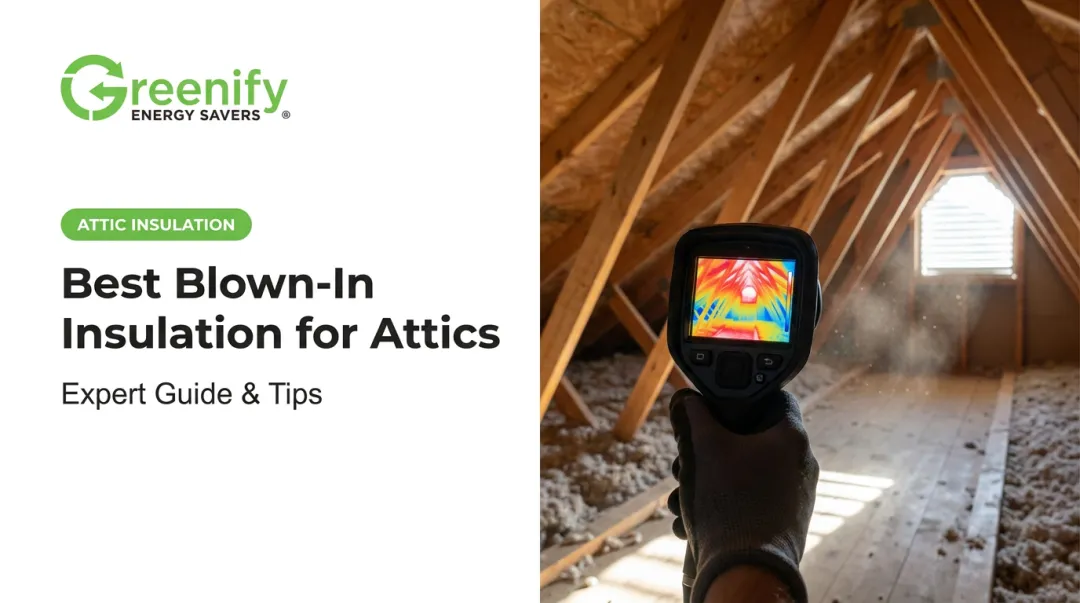
Blown-in insulation, also called loose-fill, is exactly what it sounds like: material blown into attics or wall cavities using a pneumatic machine. It's the go-to option when homeowners want to add coverage without ripping into walls or ceilings.
The appeal comes down to three practical benefits:
- Even coverage in irregular spaces where batts would leave gaps
- Lower material cost compared to spray-applied options
- Recycled content: cellulose can be made from up to 85% recycled paper and cardboard
The Three Main Types
Not all loose-fill is the same. Here's how the three common materials compare:
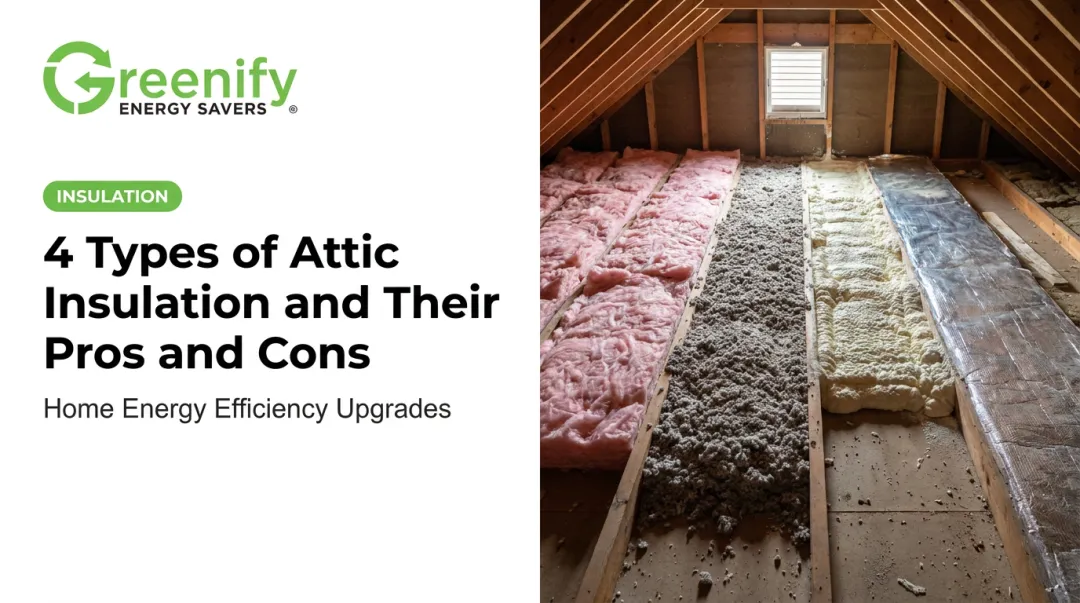
- Cellulose: R-3.2 to R-3.8 per inch settled, treated with boric acid for fire resistance and pest control
- Fiberglass: R-2.2 to R-2.7 per inch settled, noncombustible by design
- Mineral wool: R-3.0 to R-3.3 per inch settled, made largely from slag and rock, also noncombustible

Use Cases of Blown-In Insulation
Blown-in insulation dominates in a specific scenario: older homes with under-insulated attics that need an affordable comfort upgrade without a full renovation. Think of a 1960s ranch home where the attic floor has 4 inches of settled fiberglass batting — well short of modern R-value targets.
Greenify Energy Savers typically installs blown-in fiberglass up to a full R-60 (roughly 22 inches) as its standard attic specification. Utah's temperature swings between winter cold and summer heat demand a thicker thermal buffer than milder climates require.
Professional installers verify depth across the entire attic floor, not just the center. Coverage gaps near eaves and edges are where most heat loss actually happens.
Blown-in also works well as a retrofit, topping off insulation that's settled or thinned over decades without disturbing existing material.
What is Spray Foam Insulation?
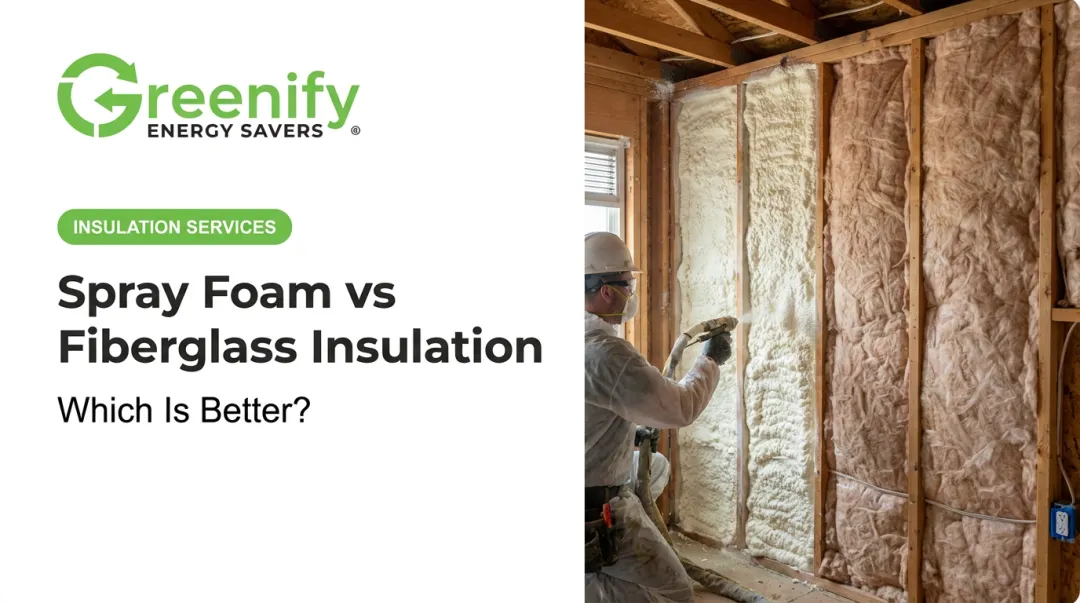
Spray foam insulation solves a different problem. Where blown-in adds thermal resistance, spray foam adds thermal resistance and stops air movement simultaneously. That combination matters most in spaces where drafts and moisture, not just heat loss, are the concern.
Once sprayed, the liquid expands to fill every gap, crack, and penetration it touches. This creates:
- A continuous air seal that loose-fill can't replicate on its own
- A moisture barrier (particularly with closed-cell formulas)
- Added rigidity to the structure it's applied to
- Long-term durability without settling
Open-Cell vs. Closed-Cell
The two formulas serve different purposes:
- Open-cell foam: Lower density (around 0.5 lb/ft³), R-3.9 per inch, more affordable, remains vapor-permeable — good for interior wall cavities and unvented attics
- Closed-cell foam: Denser (around 2.0 lb/ft³), R-7.0 per inch, moisture-resistant with FEMA flood-resistant approval and ideal where water exposure is a risk

Use Cases of Spray Foam Insulation
Industry-wide, spray foam often earns its higher price tag in trouble spots like rim joists, band boards, crawl spaces, and additions with irregular framing where blown-in simply can't seal the gaps. At Greenify Energy Savers, residential spray foam is used to seal small penetrations, where specialized equipment is a practical fit.
A crawl space with visible moisture staining or a musty smell may still need a moisture-aware plan (air sealing, drainage, or other insulation). Same goes for additions with non-standard framing: those typically need a broader insulation approach suited to larger spaces.
The R-value gap explains why closed-cell foam is discussed so often: it delivers R-7.0 per inch, compared to R-3.2-R-3.8 for cellulose and R-2.2-R-2.7 for fiberglass (Johns Manville Corbond III product data sheet). For our spray foam work to seal small penetrations, that density helps seal irregular gaps; for large cavities we use other insulation types instead.
Blown-In vs Spray Foam: Which One Is Better for Your Home?
Neither material wins universally. The right call depends on four factors:
- Budget: blown-in stretches further across large attic areas
- Specific area: attics favor blown-in, tight cavities favor spray foam
- Existing air leakage: heavy drafts point toward spray foam or air sealing first
- Local climate: Utah's cold winters and dry, hot summers both punish under-insulated attics

Choose blown-in if you're prioritizing cost-efficient coverage across an attic floor. Choose spray foam to seal small penetrations if the priority is sealing limited leaks - Greenify Energy Savers focuses spray foam on those targeted spots and pairs broader coverage with other insulation types.
One best practice applies regardless of material: air seal first, then add insulation depth. That's the standard order for blown-in projects, since loose-fill doesn't stop air movement on its own.
Spray foam can insulate and seal in a single application in the small spots where we use it. For larger spaces, we separate air sealing from bulk insulation rather than foam-coating whole areas.
Real-World Example: Insulation Upgrade in Action
Utah's Low-Income Weatherization Program offers a useful regional data point. Homes that received ceiling insulation upgrades as part of the program saw measurable energy savings, and 84% of participants reported improved comfort after their upgrades were complete (PacifiCorp evaluation report).
That mirrors what Greenify Energy Savers sees during home energy audits across Utah. A specialist inspects the attic, checks insulation depth against current R-value standards, and often finds inefficiencies homeowners didn't know existed: thin, settled batting, gaps around fixtures, or drafts at the rim joist.
High bills, uneven room temperatures, and cold drafts are the three most common triggers that bring homeowners to an audit.
For many Utah homes, the strongest return on investment comes from pairing air sealing with attic insulation depth, rather than treating either as a standalone fix. If you're noticing any of those signs, scheduling a home energy assessment with Greenify Energy Savers is the fastest way to find out which material (or combination) fits your home.
Conclusion
There's no universal winner between blown-in insulation and spray foam. The right choice comes down to which part of the home you're addressing: broad, cost-effective coverage, or a targeted fix for air leakage and moisture control.
Getting this right pays off well beyond the insulation itself : lower utility bills, more even indoor temperatures, and a stronger foundation for further upgrades. Greenify Energy Savers approaches this as part of a broader energy strategy, pairing insulation work with windows, radiant barriers, and solar installation so every upgrade builds on the last.
Frequently Asked Questions
How much does it cost to spray foam 2,000 square feet?
Our residential spray foam is used to seal small penetrations. Industry-wide, full-home pricing varies by foam type and thickness, but for our scope, cost reflects the number of small areas treated plus any related air sealing rather than a large board-foot quote.
What is the main difference between blown-in insulation and spray foam?
Blown-in is a loose-fill material that adds thermal resistance but doesn't stop air movement on its own. Spray foam expands to insulate and air-seal simultaneously when applied continuously.
Which has a higher R-value: spray foam or blown-in insulation?
Closed-cell spray foam typically delivers around R-7.0 per inch, compared to R-2.2 to R-3.8 per inch for loose-fill materials. That said, product specs vary and R-value isn't the only factor in comfort.
Can blown-in insulation and spray foam be used together in the same home?
Yes. At Greenify Energy Savers, spray foam can support air sealing to seal small penetrations, while blown-in covers the broader attic floor for overall R-value.
Is blown-in or spray foam better for older homes?
Older, leaky homes often benefit most from air sealing plus blown-in insulation for cost-effective, whole-attic coverage. Greenify may add spray foam to seal small penetrations as part of that plan.
How long does each type of insulation typically last?
Loose-fill cellulose can settle 10-20% over time, while fiberglass and mineral wool settle less, around 2-4%. Spray foam doesn't sag or compact, though its exact lifespan varies by product and installation conditions.