
This decision affects more than comfort. It shapes your utility bills, indoor air quality, and how well your home handles Utah's freezing winters and scorching summers. We'll break down cost, R-value, durability, and health factors so you can decide with confidence. Greenify Energy Savers has helped Utah homeowners tackle insulation upgrades since 2012, and we've seen firsthand what works.
Key Takeaways
- Spray foam offers higher R-value per inch and tighter air sealing, at a higher upfront cost
- Fiberglass costs less and suits DIY projects, but gaps and compression reduce performance over time
- Closed-cell spray foam doubles as a moisture barrier, making it a strong fit for Utah basements and crawl spaces
- The right choice depends on your budget, climate zone, and which part of the home you're insulating
- Correct installation is what determines whether either material hits its rated R-value
Spray Foam vs Fiberglass: Quick Comparison
Four factors separate these materials in the real world: upfront cost, thermal performance, long-term durability, and how each gets installed. Here's how spray foam and fiberglass stack up on each.
Cost
Spray foam is priced by board foot (one square foot at one inch thick):
- Open-cell spray foam: $0.60–$1.60 per board foot installed
- Closed-cell spray foam: $1.30–$3.10 per board foot installed
- Fiberglass batts/rolls: $0.30–$1.50 per square foot installed, according to Consumer Reports' 2025 insulation shopping guide
Because spray foam pricing depends on thickness, always compare bids at the same installed depth and target R-value. A cheap board-foot quote doesn't mean much if it won't get you to code.
R-Value Per Inch
| Material | R-value per inch |
|---|---|
| Open-cell spray foam | ~R-3.6 |
| Closed-cell spray foam | ~R-6.1 |
| Fiberglass batts/rolls | R-2.6 to R-4.3, depending on product |
Closed-cell foam wins on raw thermal performance per inch. Fiberglass can get close with high-density products, but only if it's installed without compression—which is where installation quality starts to matter as much as the material itself.

Durability & Lifespan
- Fiberglass: A study of eight batt samples with 30+ years of service (averaging 40 years) found they still retained 95.5% of their labeled R-value, though results varied with installation quality. Compression is the real enemy: an R-19 batt squeezed to 3.5 inches performs closer to R-13.
- Spray foam: Closed-cell foam is rigid and resists compression far better than open-cell. The industry has used SPF since the 1960s, though no single source has published a universal "years of service" figure for either material.
Installation
- Spray foam: Requires professional equipment and trained applicators — this isn't a weekend DIY project.
- Fiberglass: Batts and rolls are DIY-friendly with proper safety gear, but loose-fill typically needs a blower, and wall cavities often call for a contractor to avoid gaps.
Since compression and gaps are what quietly rob fiberglass of its rated performance, and spray foam demands specialized application, professional installation matters for both materials. Greenify Energy Savers installs fiberglass and other bulk insulation across Utah homes, and uses residential spray foam to seal small penetrations - sizing the approach to each home's needs rather than defaulting to one material.

What Is Spray Foam Insulation?
Spray foam insulation starts as two liquid components (an isocyanate and a polyol resin) that combine on contact and expand into a solid foam. It fills cavities, cracks, and gaps as it hardens, creating both insulation and an air barrier in one step.
How it performs depends on which of two types you use:
- Open-cell foam: Softer, less dense, more affordable. Good for interior walls and areas without moisture concerns.
- Closed-cell foam: Denser, more rigid, and moisture-resistant. Ideal for basements, crawl spaces, and exterior applications where water exposure is a risk.
Use Cases of Spray Foam
Spray foam performs best in:
- Small penetrations - spray foam to seal small gaps (Greenify Energy Savers scope)
- Hard-to-reach small gaps - irregular openings where caulk alone may not seal
- Larger cavities - industry-wide foam can cover attics and crawl spaces; Greenify pairs those areas with bulk insulation instead
In Utah's climate, where winter lows and summer highs put constant pressure on your HVAC system, sealing air leaks matters. ENERGY STAR estimates that combined air sealing and insulation upgrades save an average of 15% on heating and cooling costs. Spray foam contributes directly to that savings by sealing the gaps traditional insulation leaves behind.

What Is Fiberglass Insulation?
Fiberglass insulation is made of fine woven glass fibers that trap air pockets. Those pockets slow heat transfer, which is what gives the material its insulating value.
It comes in three common forms:
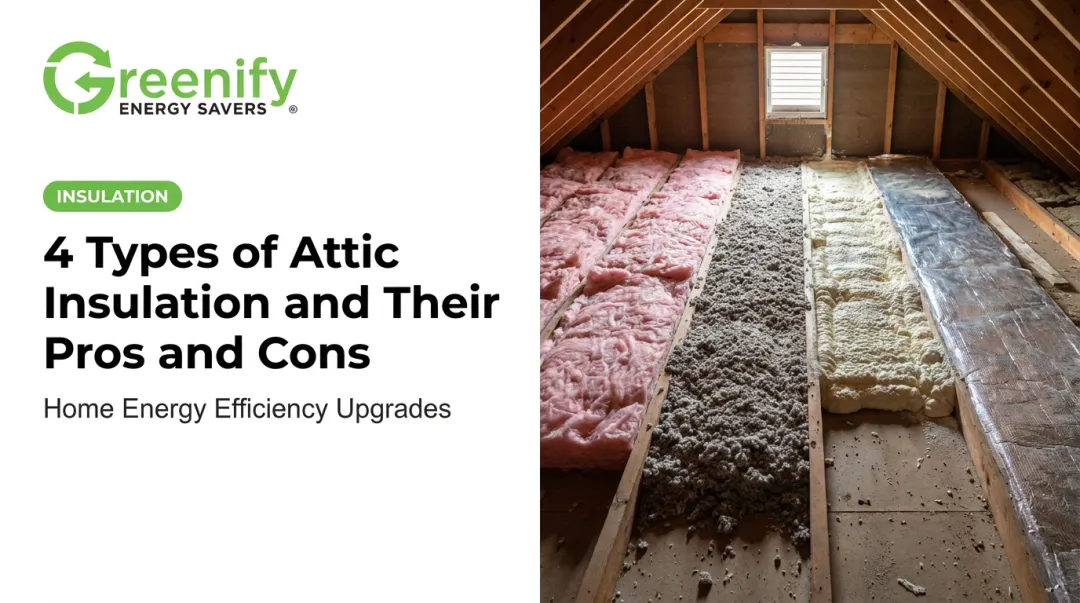
- Batts — pre-cut panels sized for standard stud and joist spacing
- Rolls — continuous lengths for larger, uninterrupted areas
- Loose-fill — blown into attics and irregular spaces for more even coverage
Core benefits homeowners feel day-to-day:
- Lower upfront cost compared to spray foam
- Naturally fire-resistant (glass doesn't burn)
- Dampens sound between rooms and floors
Use Cases of Fiberglass
Fiberglass shows up most often in:
- Standard wall cavities with accessible framing
- Attics, especially as blown-in loose-fill
- New construction, where studs and joists are exposed before drywall goes up
Batts and rolls (known as blanket insulation) rank among the most common insulation types in American homes, and blown-in fiberglass alone accounted for 19% of the insulation market in 2022, according to the North American Insulation Manufacturers Association. Performance still hinges on installation quality, though. Gaps, compression, or missed spots around outlets and framing can quietly erode the R-value you're paying for.

Greenify Energy Savers installs fiberglass insulation with attention to these common problem areas, helping Utah homeowners get the full R-value from their investment.
Spray Foam vs Fiberglass: Which Is Better for Your Home?
There's no universal winner here. The right call depends on:
Budget - fiberglass costs less per square foot for large areas
Climate exposure - attics and crawl spaces facing Utah's temperature swings need strong air sealing and adequate R-value
Moisture risk - basements and crawl spaces need moisture-aware materials and detailing
Area of the home - accessible new-construction walls and attic floors are prime fiberglass territory; spray foam at Greenify focuses on small spots Choose spray foam to seal small penetrations if (Greenify scope):
You need to seal small penetrations or a similar limited gap
You want targeted air sealing at small irregular openings
Choose fiberglass or other bulk insulation if:
- You're covering attics, walls, crawl spaces, or other large areas
- You're working with a tighter budget for broad coverage
- You want a DIY-friendly option for a straightforward cavity
What About Health and Indoor Air Quality?
Both materials are safe once properly installed and cured. The differences show up during installation:
- Fiberglass can irritate eyes, skin, and lungs during handling. Goggles, gloves, and a respirator solve this.
- Spray foam application generates isocyanate vapors that can exceed safe exposure limits. Proper ventilation and professional installation solve this.
Once cured, spray foam is generally inert, and correctly installed fiberglass carries no chemical off-gassing risk. Either way, installation quality matters more than the material itself.
The Hybrid Approach
Since installation quality drives performance either way, many Utah homes don't need an all-or-nothing answer. At Greenify Energy Savers, spray foam is used to seal small penetrations, while fiberglass and other insulation cover larger cavities where budget and coverage matter more. A Greenify Energy Savers home energy audit can map out exactly where each approach makes the most sense in your home.

Real-World Example & Final Verdict
Picture a typical scenario we see across Utah: a homeowner with a 1980s-era house notices sky-high winter heating bills and a chronically cold upstairs bedroom. An attic inspection reveals compressed, uneven fiberglass insulation with visible gaps around the attic hatch and recessed lighting.
The fix often isn't ripping everything out. It's targeted air sealing around the leak points, followed by topping off attic insulation to Greenify's recommended standard of R-60 (about 22 inches) of blown-in fiberglass.
Combined air sealing and insulation upgrades like this align with the ENERGY STAR benchmark of 15% savings on heating and cooling costs for homes in this situation.
The takeaway: the right insulation choice comes down to matching material strengths to your home's specific pain points. There's no single "winner" — just the right fit for your budget, climate zone, and problem areas.
Ready to find out what your attic needs? Greenify Energy Savers offers a free energy assessment for Utah homeowners, including a hands-on attic and insulation inspection as part of a full four-step audit:
- Blower door test to measure air leakage
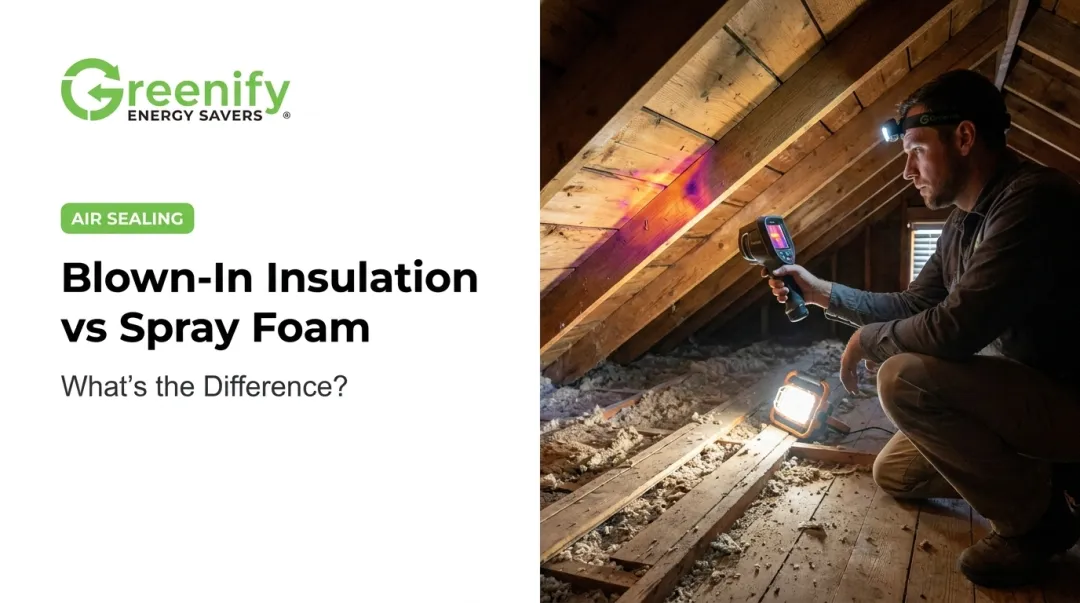
- Thermal imaging to spot hidden gaps
- Attic evaluation for insulation depth and condition
- Window and door inspection for drafts
Call 801-948-4464 to schedule before winter installation schedules fill up.
Both spray foam and fiberglass are proven, effective materials. The real risk isn't picking the "wrong" one — it's skipping the professional assessment that tells you which one actually solves your home's problem.
Frequently Asked Questions
Which is better, spray foam or fiberglass insulation?
Spray foam generally outperforms fiberglass in R-value and air sealing, especially in leak-prone areas like attics and crawl spaces. Fiberglass remains a solid, budget-friendly choice for standard wall cavities, so the better option depends on your specific needs and climate.
What is the healthiest insulation for a house?
Both materials are safe once properly cured or installed. Closed-cell spray foam limits airborne particles after curing, while fiberglass avoids any chemical off-gassing. Proper installation is the biggest health factor either way.
How long does spray foam insulation last compared to fiberglass?
Spray foam resists sagging and settling thanks to its rigid, expanded structure, particularly closed-cell foam. Fiberglass has documented field evidence of retaining 95.5% of its labeled R-value after 40 years of service, provided it hasn't been compressed or gotten wet.
Can I install fiberglass or spray foam insulation myself?
Fiberglass batts can be DIY-installed with proper safety gear like gloves, goggles, and a respirator. Spray foam requires professional equipment and trained applicators due to the chemical exposure risks during application.
How much can I save on energy bills by switching to spray foam?
ENERGY STAR's best-supported benchmark shows combined air sealing and insulation upgrades save an average of 15% on heating and cooling costs. This applies to the full upgrade package, not spray foam alone, so actual savings depend on your home's current condition.
Does spray foam or fiberglass perform better in cold climates like Utah?
Spray foam's superior air sealing and higher R-value per inch make it especially effective for Utah's cold winters and hot summers, particularly in attics and crawl spaces prone to drafts. Fiberglass still performs well in accessible wall cavities when installed correctly and kept dry.