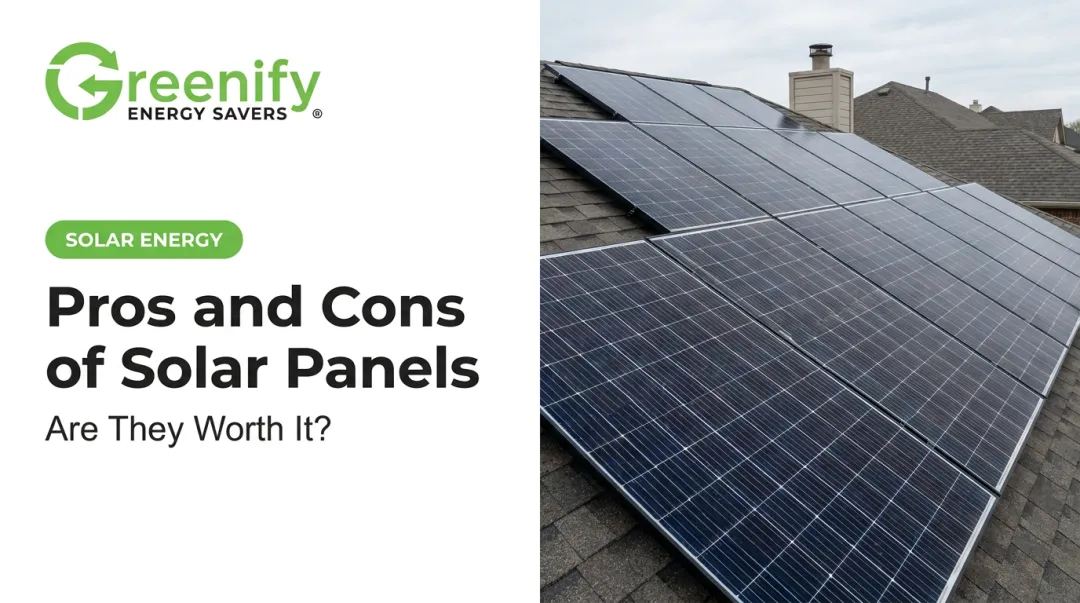

Solar gets framed as an environmental choice, but that's only part of the story. The real value shows up in your monthly bill, your home's resale price, and how well your household holds up during an outage. This article breaks down what solar actually delivers, financially and practically, not just in theory.
Key Takeaways
- Solar can cut or eliminate monthly electricity bills over a 25+ year system lifespan
- Homes with owned solar systems often sell at a premium versus comparable homes without one
- Insulation and window upgrades shrink solar system size and speed up payback
- High-usage households, sellers, and homes in unreliable grid areas see the biggest returns
What Is Home Solar Panel Installation?
A home solar system is a rooftop photovoltaic (PV) setup that converts sunlight into electricity you can use immediately or store. Utah installations generally fall into two setups:
- Grid-tied systems: Use net billing, feeding excess power back to Rocky Mountain Power for credits. You draw from the grid when panels underproduce.
- Battery-backed systems: Add battery storage to keep essential circuits running during an outage, giving you backup power independent of the grid.
For most homeowners, solar functions primarily as a financial and resilience investment. The emissions reduction follows as a secondary benefit rather than the main motivator.

Key Benefits of Installing Solar Panels for Your Home
These aren't abstract talking points. Each benefit below is something you can measure directly, on your utility bill, your home's appraisal, or your power during a storm.
Lower or Eliminate Your Monthly Electricity Bills
Solar generates electricity at your home, which means less power purchased from the utility each month. Net metering (or net billing, under Rocky Mountain Power's current tariff) lets you send unused solar power back to the grid for bill credits, offsetting usage during hours your panels aren't producing.
The numbers back this up. A 2024 Berkeley Lab study of roughly 500,000 rooftop solar adopters found median gross bill savings of $1,987 per year, according to Berkeley Lab's research. Net savings, after loan or lease payments, landed at $691 per year.
Over a 25-year system lifespan, EnergySage models put total savings anywhere from $41,000 to $155,000, depending heavily on installation cost and local rates.
This benefit matters most if you:
- Run high monthly usage (large households, pools, EV charging)
- Live in a region where utility rates keep climbing
- Plan to stay in your home long enough to capture the full payback
Increased Home Resale Value
An owned solar system functions like a home improvement, similar to a finished basement or a new roof. Buyers pay more for a home that already generates free electricity, because it means they skip the upfront installation cost entirely.
Berkeley Lab's 2015 study of over 22,000 home sales found owned solar systems added about $4 per watt, according to Berkeley Lab's resale premium analysis. That's roughly $15,000 for an average 3.6-kW system.
One important caveat: leased or third-party-owned systems didn't show the same statistically significant premium in Berkeley Lab's follow-up study. If resale value matters to you, owning your system outright (rather than leasing) is what protects that equity.
Consider this factor carefully if you:
- Plan to sell within the next 5-10 years
- Live in a competitive housing market where buyers compare upgrades
- Want to avoid passing installation costs onto a buyer
Energy Independence and Backup Resilience
Standard grid-tied solar shuts off automatically during a power outage, for safety reasons tied to line workers repairing the grid. Without a battery, your panels won't help you when the power goes out. Pairing solar with battery storage changes that, letting stored energy power your essentials while the grid is down.
This is becoming more relevant every year. In 2024, the average U.S. customer went without power for about 11 hours, the highest in a decade and nearly double the previous ten-year average, according to EIA outage data. Major weather events caused 80% of that outage time.

Battery backup matters most for:
- Homeowners in areas prone to severe storms or grid instability
- Households relying on medical equipment or refrigerated medication
- Anyone wanting to avoid spoiled food or lost work time during outages
- Remote workers who can't afford extended internet or computer downtime
Rocky Mountain Power's Wattsmart Battery Program currently offers upfront incentives for qualifying battery installations, though the terms have shifted over time. Working with a Trade Ally like Greenify Energy Savers means someone is tracking those changes for you.
Environmental Impact and Reduced Carbon Footprint
Solar electricity displaces power generated from fossil fuels, primarily coal and natural gas, on the grid. The National Renewable Energy Laboratory found that solar PV produces median lifecycle emissions below 50 grams of CO2 equivalent per kilowatt-hour, compared to roughly 1,000 grams for coal generation. Most of solar's emissions come from manufacturing, not from producing electricity once it's installed.
The exact emissions offset for any single household depends on your system's output and your local grid mix, so there's no universal "trees planted" number that applies to every home. What's consistent is the direction: every kilowatt-hour your panels produce is one less kilowatt-hour coming from a fossil-fuel power plant.
This benefit resonates most with:
- Homeowners motivated by climate impact alongside savings
- Households in states with strong clean energy incentive programs
- Buyers looking for homes with a smaller environmental footprint
What Homeowners Miss Out On By Delaying Solar
Waiting on solar isn't a neutral decision. It has real costs that compound the longer you put it off.
- Rising bills with no offset. Rocky Mountain Power customers are already facing a 4.7% rate increase, adding to years of climbing Utah electricity costs.
- Shrinking incentives. Utah's state solar credit has already expired for systems installed in 2024 or later, and utility rebate programs have continued to reduce their caps.
- Fewer utility rebates. The Wattsmart Battery Program and similar utility incentives have also reduced their caps, so waiting rarely leads to a better deal.
- Continued outage vulnerability. Without solar-plus-storage in place, you're still fully dependent on a grid that's showing more strain from severe weather each year.
How to Maximize the Value of Your Solar Investment
Maximizing your solar investment starts before installation. Proper system sizing and reduced energy waste determine how much you'll actually save.
- Start with a proper roof and usage assessment. Your installer should evaluate roof orientation, shading, and your actual electricity consumption before recommending a system size. Oversizing wastes money; undersizing limits your savings.
- Reduce consumption before you size your system. Greenify Energy Savers calls this "Reduce Then Produce": pairing solar with insulation, air sealing, and Low-E windows lowers your baseline energy use, so you need fewer panels and pay less upfront.
- Track performance and revisit incentives over time. Utility rebate programs and financing terms change. Rocky Mountain Power's battery incentives, for example, have already shifted more than once. Checking in periodically ensures you're not leaving money on the table.

If you're not sure where your home stands, a free solar quote that factors in both your roof and your home's energy efficiency is a practical starting point.
One more way to stretch your investment further: Greenify Energy Savers has partnered with Maxwell Power (Previously HDM Renewable Finance), a national leader in renewable finance, to offer qualifying homeowners 25% off a solar and/or battery installation - giving you another lever to maximize savings beyond rebates alone.
Conclusion
Solar panels deliver compounding benefits: lower bills, added resale value, backup resilience, and a smaller carbon footprint, but only when the system is sized correctly for your home. Treating solar as one piece of a broader energy strategy, alongside insulation, windows, and efficient appliances, gets you more savings from a smaller, less expensive system.
The best next step is a personalized home energy assessment. Greenify Energy Savers offers this service across Utah, giving homeowners an actual savings estimate instead of a generic one.
Frequently Asked Questions
What are the advantages of installing solar panels?
Solar panels lower or eliminate monthly electricity bills, add resale value to your home, and provide backup power when paired with battery storage. They also reduce your household's reliance on fossil-fuel-generated electricity.
Who benefits the most from installing solar panels?
Homeowners with high electricity usage, sunny or south-facing roofs, and plans to stay long-term see the biggest financial return. Households in areas with unreliable grid service also gain valuable backup power during outages when a battery is attached to the solar system.
How long does it take for solar panels to pay for themselves?
Payback typically ranges from 5 to 15 years, depending on system cost, incentives, and local electricity rates. EnergySage estimates the average closer to 10 years, though your timeline depends on usage and financing choices.
Do solar panels work in cloudy or cold climates?
Yes. Panels still generate power on cloudy days, though output drops compared to full sun. Cold temperatures don't reduce efficiency. In fact, panels operate slightly better below 77°F than in extreme heat.
Will solar panels increase my home's value?
Owned solar systems typically add resale value. Berkeley Lab research found owned systems added roughly $4 per watt in home value, though leased systems haven't shown the same measurable premium.
What incentives are available for solar panel installation?
Utah's state solar credit has expired for systems installed in 2024 or later. Utility programs, like Rocky Mountain Power's battery incentives, still exist and change periodically, so ask during a consultation. Greenify Energy Savers also works alongside Maxwell Power (Previously HDM Renewable Finance), a national leader in renewable finance, which offers qualifying homeowners 25% off a solar and/or battery installation - providing additional savings flexibility beyond standard rebate programs.