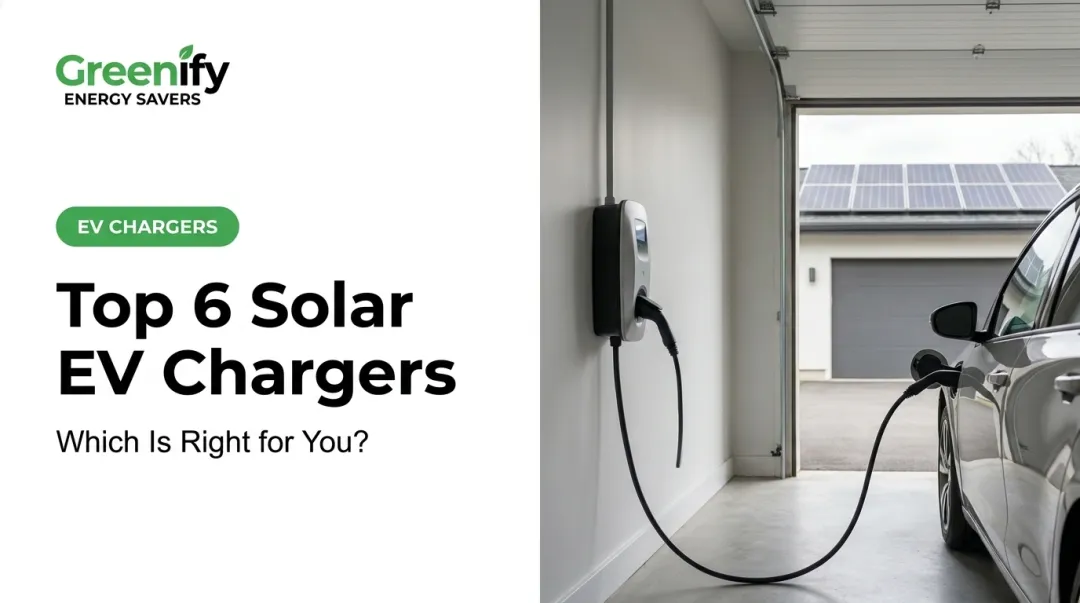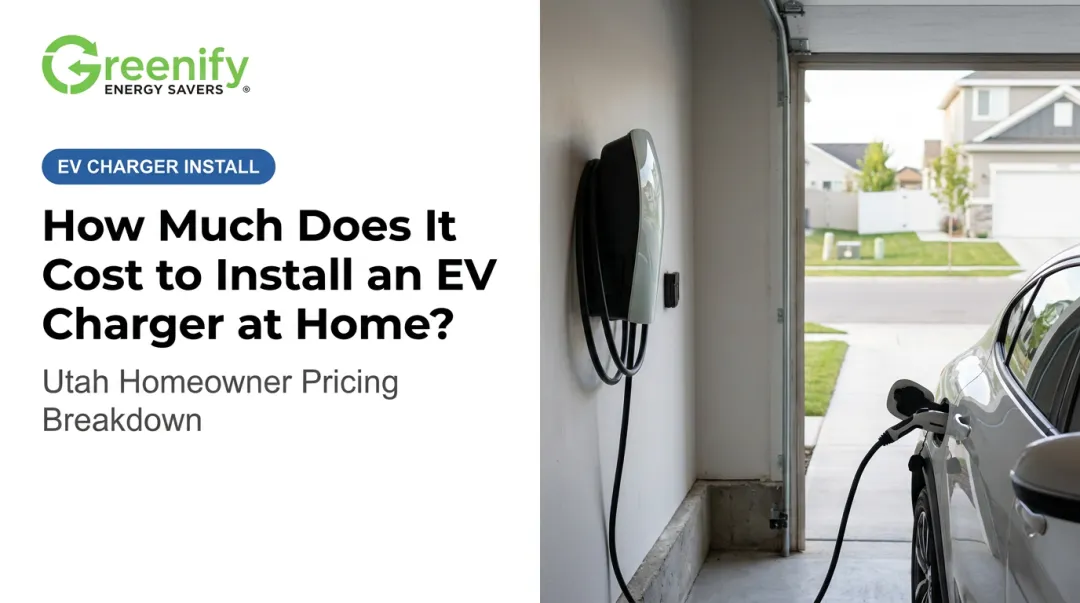

Many homeowners don't realize thousands of dollars in rebates and tax credits exist to offset the cost of a home charging setup. The catch is that these incentives live across three different layers, federal, state, and utility, and most people never stack them together.
This guide breaks down the federal tax credit, state and local rebate programs, utility incentives, and whether a Level 2 charger is actually worth the investment for your home.
Key Takeaways
- The federal tax credit covers 30% of charger and installation costs, up to $1,000, in qualifying census tracts before June 30, 2026
- State and utility rebates range from $250 to $1,500 based on location and income
- Pairing an EV charger with solar can maximize long-term savings and energy independence
- A local installer familiar with Utah's programs helps you avoid missed deadlines or eligibility mistakes
Understanding the Federal Tax Credit for Home EV Chargers
The Alternative Fuel Vehicle Refueling Property Tax Credit, known as Section 30C, is the biggest incentive most homeowners overlook. It covers 30% of equipment and labor costs, up to $1,000 per charging port, for chargers installed at your primary residence, according to IRS guidance on the Alternative Fuel Vehicle Refueling Property Credit.
Who Actually Qualifies
Here's the part that trips people up: not every home qualifies. Your property must sit in an eligible low-income community census tract or a non-urban census tract. Suburban homes in well-off areas often don't make the cut.
Before buying anything, check your address using the official 30C eligibility locator tool. It takes about two minutes and will save you from an unpleasant surprise at tax time. Our team at Greenify Energy Savers confirms eligibility for Utah homeowners before scheduling any installation, so you know where you stand before committing to a project.
A Simple Example
Say your total project costs break down like this:
- Level 2 charger unit: $600
- Wall mount and installation labor: $500
- Electrical panel upgrade: $900
- Total cost: $2,000
At 30%, that's a $600 credit, well under the $1,000 cap. If your costs ran higher, say $4,000, the credit would max out at $1,000 rather than scaling further.

The Clock Is Ticking
This credit only applies to property placed in service by June 30, 2026. Installations completed after that date won't qualify, according to IRS Section 30C guidance. If you've been putting off the decision, this deadline should move you off the fence. Once you're ready to install, claiming the credit itself is straightforward.
How to Claim It
- Keep every receipt — equipment, labor, and any panel upgrade costs
- Complete Form 8911, the Alternative Fuel Vehicle Refueling Property Credit form
- File it with your tax return for the year the charger was placed in service
One important distinction: this is a credit, not a rebate. You pay the full amount upfront and recover the 30% when you file taxes, not at checkout. Greenify Energy Savers provides itemized invoices for every EV charger installation, giving you the documentation needed to claim this credit without guesswork.
State and Local EV Charger Rebate Programs
Beyond the federal credit, plenty of states run their own residential rebate programs. Amounts and eligibility rules differ significantly by state, county, and even utility provider.
Here's the range in practice:
| Program | Amount | Notes |
|---|---|---|
| Maryland FY27 EVSE Rebate | 50% of costs, up to $700 | Equipment must be paid for and operational before applying |
| New Jersey Charge Up Program | Up to $250 | Covers charger purchase; installation may be covered separately by utility |
Some programs add extra funds for income-qualifying households or homes in disadvantaged communities, stacking on top of the base rebate amount. Utah homeowners face a different reality: state-level residential charger rebates aren't consistently available the way they are in Maryland or New Jersey. Programs come and go, and funding is often first-come, first-served, so last year's program may no longer exist.
This inconsistency is exactly why our team at Greenify Energy Savers helps Utah homeowners check current program availability and eligibility as part of every EV charger installation quote.
Before purchasing equipment, check the DOE's Alternative Fuels Data Center or your state energy office website. Application deadlines and funding caps change fast:
- Confirm the program is still active and funded
- Verify your equipment and installation qualify
- Save all receipts and documentation before applying
Buying before confirming eligibility can cost you the rebate entirely.
Utility Company Rebates for Home EV Chargers
Many electric utilities run their own Level 2 charger rebate programs, separate from anything state or federal. Amounts typically range from $200 to $1,500.
Two examples illustrate the spread:
- LADWP (Los Angeles) offers up to $1,000 standard, rising to $1,500 for income-qualifying customers, according to LADWP's Residential EV Charger Rebate Program
- Eversource (Connecticut) offers up to $1,500 for a qualifying smart charger, though as of 2026 it's limited to households at or below 300% of the Federal Poverty Level
Rocky Mountain Power, which serves Utah homeowners, offers a residential Time-of-Use rate option rather than a direct single-family charger rebate. On-peak hours run 6 p.m. to 10 p.m. on weekdays, so charging outside that window can meaningfully lower electricity costs even without a rebate check. Greenify Energy Savers, as a Rocky Mountain Power Trade Ally, can help Utah homeowners identify which time-of-use plan fits their charging habits.

Availability and amounts vary by provider, so contact your utility directly before assuming a program exists. Many pair rebates with time-of-use rates, stacking upfront savings with lower charging costs for years afterward.
Is a Level 2 Home EV Charger Worth the Investment?
Short answer: for most EV owners planning to keep their vehicle a while, yes. Here's why.
Speed Makes the Difference
- Level 1 charging adds roughly 5 miles of range per hour
- Level 2 charging adds roughly 25 miles of range per hour, according to the DOE's Alternative Fuels Data Center
Level 2 chargers work with virtually every EV sold in the U.S. through the J1772 connector, and newer NACS-equipped vehicles can use an adapter. That broad compatibility is only half the equation, though — the other half is what installation actually costs.
What It Actually Costs
Hardware alone runs $380 to $690 for the charger unit itself. The full installed cost depends heavily on:
- Your panel's existing capacity
- Whether you need a dedicated circuit or panel upgrade
- Distance between your electrical panel and parking spot
- Local permit requirements
Homes with older panels often need upgrades, which adds cost but also qualifies for the federal credit calculation.
Where the Math Works Out
Once you stack the federal 30% credit with a state or utility rebate, the effective out-of-pocket cost often drops substantially. Utah homeowners can pair that federal credit with state incentives and Rocky Mountain Power rebate programs, so a $2,000 project might land closer to $1,000-$1,200 after incentives. For anyone keeping their EV for five-plus years, that math tends to favor installing sooner rather than later.
Greenify Energy Savers installs Level 2 chargers as a Rocky Mountain Power Trade Ally and walks homeowners through which credits and rebates actually apply to their project.
Maximize Your Savings: Pairing EV Charging with Solar and Home Energy Upgrades
Charging your EV with power from your own roof, instead of pulling from the grid, changes the savings equation entirely. You're not just avoiding gas station visits — you're generating the electricity that powers your car.
Some state and utility programs offer additional incentives when charging is paired with solar or battery storage upgrades, though availability varies by program and changes often.
Greenify Energy Savers has spent more than a decade helping Utah homeowners coordinate solar and EV charging projects for maximum savings. The company evaluates which rebates and incentives apply to a homeowner's specific situation and coordinates installation of both solar and EV charging infrastructure under one project.
Their approach, which they call "Reduce Then Produce," starts by lowering a home's energy demand before sizing a solar system:

- Insulation and air sealing reduce heating and cooling loss
- Window replacement can save up to 16% on winter heating and 37% on summer cooling
- Radiant barriers and solar attic fans ease strain on cooling systems
These upgrades lower overall energy demand, which means a more efficient home needs fewer solar panels. That sequencing can shrink your solar system size, and its cost, before EV charging even enters the equation.
Bundling efficiency upgrades with solar and EV charging into one project, rather than piecing them together separately, tends to be more affordable than buying each service on its own.
If you're weighing an EV charger install, it's worth talking to a local energy provider who understands the full incentive landscape, not just one slice of it. That way you're not leaving savings on the table, whether that means a census tract check, a utility rebate, or a complementary upgrade like attic insulation that lowers your bills even further.
Frequently Asked Questions
Is there a tax credit for installing a level 2 charger?
Yes. The federal government offers a 30% tax credit up to $1,000 through Form 8911, but it only applies to homes in qualifying census tracts and expires for installations after June 30, 2026.
How to get a free EV charger for home?
Some utility programs offer free or heavily subsidized Level 2 chargers for qualifying income levels or program participants. Check with your local electric utility and state energy office for current offers.
Is a level 2 EV charger worth it?
For most homeowners, yes. It charges roughly five times faster than Level 1 and works with nearly all EVs. After stacking rebates and tax credits, the effective cost drops significantly.
Do I qualify for the EV charger tax credit based on where I live?
Eligibility depends on whether your home sits in a qualifying low-income or non-urban census tract. Use the official 30C eligibility locator to check your address.
How much does it cost to install a home EV charger?
Charger hardware runs $380 to $690. Total installed cost depends on your electrical panel's condition and its distance from the parking area, and older homes often need panel upgrades that add to the total.
Can I combine EV charger rebates with solar incentives?
In many cases, yes, though specific combinations depend on your state and utility programs. Greenify Energy Savers can review your specific EV charger and solar rebate options to confirm which programs you can legally stack together.