
That shift is pushing Utah homeowners to ask a real question: generator or battery backup?
The answer affects more than convenience. It shapes your upfront costs, monthly bills, noise levels, and how independent your home becomes when the grid goes down. This guide breaks down both options so you can choose with confidence.
Key Takeaways
- Batteries run silently and fuel-free; generators cost less upfront but burn fuel
- Generators excel in long, high-load outages; batteries suit frequent, short ones
- Pairing a battery with solar delivers daily bill savings, not just backup power
- Utah homeowners can claim Rocky Mountain Power's Wattsmart Battery incentives
- Your choice depends on outage history, budget, and desired savings vs. standby power
Battery Backup vs Generator: Quick Comparison
Here's how battery backup and generators compare side by side across cost, noise, and maintenance.
| Factor | Battery Backup | Generator |
|---|---|---|
| Upfront cost | Higher (roughly $15,000+ for a single 13.5 kWh unit) | Lower ($8,000-$16,000 installed) |
| Ongoing cost | Minimal, no fuel required | Fuel, oil changes, and annual servicing |
| Power source | Solar panels or grid electricity, stored for later use | Natural gas, propane, or diesel combustion |
| Noise | Silent | Loud, comparable to outdoor equipment running nearby |
| Emissions | None on-site | Combustion exhaust, carbon monoxide risk |
| Maintenance | Minimal, no moving parts | Regular oil changes, spark plugs, monthly test runs |
| Runtime | Capacity-limited unless paired with solar | Runs as long as fuel supply lasts |
A 13.5 kWh residential battery averages $15,647 before incentives, according to EnergySage's 2026 storage cost data. Standby generators, by comparison, typically run $8,000 to $16,000 installed, based on figures from Generac.
That upfront gap matters, but it's not the whole story: batteries can offset costs through incentives and daily use, while generators only earn their keep during an outage.
What Is a Whole Home Battery Backup?
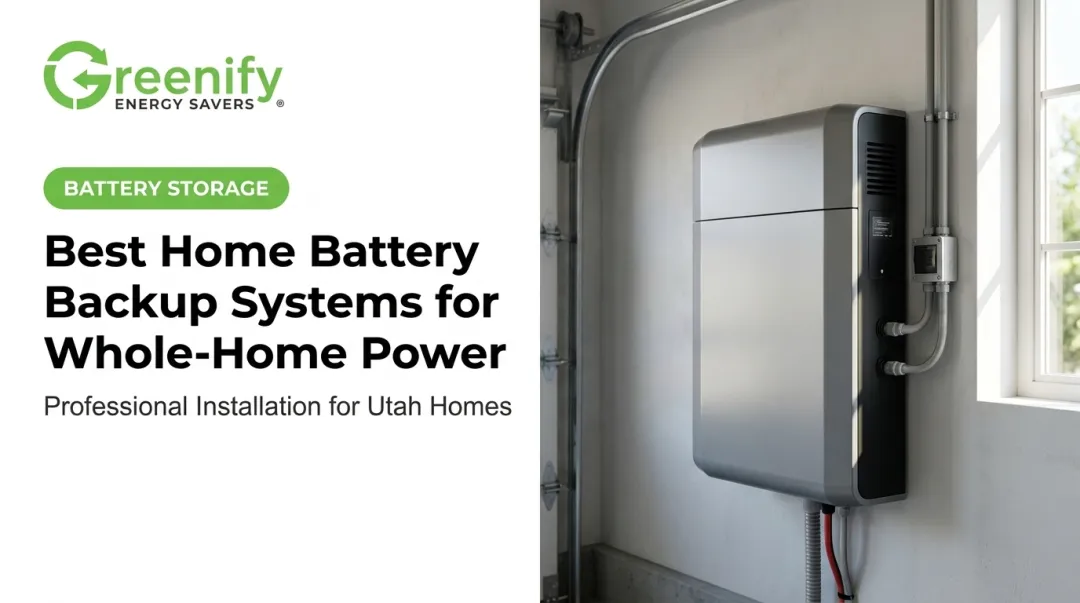
A whole-home battery backup is a permanently installed lithium battery wired into your electrical panel. It stores energy from solar panels or the grid, then automatically powers your home when the utility goes down.
The switchover happens without you lifting a finger. There's no pulling a cord or flipping a switch. The system senses the outage and takes over.
Standalone vs Solar-Paired Systems
Not every battery works the same way:
- Grid-charged batteries pull power from the utility during off-peak hours, then discharge it later, useful for both outages and avoiding peak-rate charges
- Solar-plus-storage systems recharge from sunlight, giving you multi-day backup potential instead of a single discharge cycle
- Hybrid systems draw from both sources, topping off with grid power whenever solar production dips, so the battery stays ready for the next outage

Sizing also matters. A smaller battery might only cover essential circuits, like your refrigerator, lighting, and internet router. Larger households often need bigger capacity or multiple units to cover the whole home, including HVAC and well pumps.
This is where working with an experienced installer pays off. Greenify Energy Savers helps Utah homeowners size battery systems, often paired with solar, based on actual household energy use rather than guesswork.
As a Rocky Mountain Power Trade Ally, the company also helps customers navigate the Wattsmart Battery Program, which offers $1,000 in incentives for systems under 10 kW and $2,000 for systems 10 kW and above.
Use Cases of Whole Home Battery Backup
Battery backups make the most sense for:
- Homeowners facing short, frequent outages who want quiet, low-maintenance protection for essentials
- Households already invested in solar, where the battery charges during the day and discharges during outages or expensive peak-pricing hours
- Anyone who wants backup power that also lowers monthly bills, not just equipment that sits idle until needed
Research from Berkeley Lab found that residential batteries used for solar self-consumption can generate bill savings of up to $20 to $30 per kWh of storage capacity annually, depending on location and utility rate structure. That's meaningful value happening every single day, not just during emergencies.
What Is a Generator?
A generator creates electricity on demand by burning fuel, natural gas, propane, or diesel, and delivers it to your home through an automatic transfer switch. That switch detects the outage, starts the generator, and shifts your home's load away from the grid.
Standby vs Portable Models
Two main categories exist:
| Type | Installation | Startup | Power Capacity |
|---|---|---|---|
| Standby | Permanent, professionally installed | Automatic | Entire home |
| Portable | No installation required | Manual | Select circuits or essential appliances |
Standby units need professional installation, proper ventilation, and code-compliant placement. Cummins requires generator enclosures to sit at least 60 inches from any openings into occupied living spaces, a rule designed to prevent carbon monoxide buildup indoors.
That risk is real: the Consumer Product Safety Commission has tied portable generators to an estimated 765 non-fire carbon monoxide deaths since 2009. The danger centers on portable units run indoors or too close to windows, not properly installed standby systems.
Use Cases of Generators
Generators fit best when:
- Outages in your area are rare but stretch on for days at a time
- Your home relies on high-draw equipment like central air, electric heat, or a well pump
- Solar isn't installed or planned, and lower upfront cost matters more than long-term savings
Runtime depends heavily on fuel type and load. Generac's own data shows a 10 kW propane generator uses about 0.97 gallons per hour at half load. That works out to roughly 72 gallons to keep it running for three straight days, not counting required cooldown periods. Natural gas models connected to a piped supply can run indefinitely, limited only by demand on the line itself.
Battery Backup vs Generator: Which Is Better?
There's no universal winner here. The right choice comes down to five factors:
- Outage frequency and duration - Frequent short outages favor batteries; rare multi-day events favor generators
- Budget - Lower upfront cost points to generators; long-term savings potential points to batteries
- Noise tolerance - Batteries run silently; generators do not
- Environmental priorities - Batteries produce zero on-site emissions, especially paired with solar
- Existing or planned solar - If you already have panels, adding storage often makes more financial sense than a generator
| Choose... | If you... |
|---|---|
| A generator | Experience rare but extended blackouts and want the lowest upfront cost |
| A battery backup, ideally with solar | Want quiet, low-maintenance power that also cuts your electric bill between outages |
Utah's electricity rates have climbed 24% over five years, an average of 4.8% annually, according to Rocky Mountain Power data. That trend alone is pushing more homeowners toward solar-plus-storage, since it locks in savings regardless of what the grid does next.
That upward trend makes getting the sizing right even more important. Greenify Energy Savers starts with a home energy audit, evaluating insulation, appliance load, and usage patterns before recommending a system size. Because the company handles solar, battery storage, and efficiency upgrades under one roof, homeowners get a complete picture instead of a single-product sales pitch.
Ready to compare your options? Request a free energy assessment or call 801-948-4464 to talk through what fits your home and budget.
Conclusion
Neither generators nor battery backups win outright. Generators offer proven, high-capacity power for extended outages at a lower starting price. Battery backups, especially paired with solar, deliver quiet, clean power plus everyday bill savings.
The right call depends on your outage history, your budget, and whether you want a system that only works during emergencies or one that pays you back every day it's not.
Before deciding, look at how often your power actually goes out, how long it typically lasts, and whether solar already makes sense for your roof. That combination points to the right answer faster than any spec sheet. If solar already fits your roof, Greenify Energy Savers can help you weigh battery backup against a generator based on your home's actual outage patterns and budget.
Frequently Asked Questions
Is battery backup better than a generator?
It depends on your situation. Batteries are generally better for quiet, clean, everyday value and shorter outages, while generators handle very long outages requiring high continuous power more effectively.
How long will a whole house battery backup last?
Runtime depends on battery capacity and how much energy your household uses. A single 13.5 kWh unit might cover essentials for several hours, while pairing with solar extends that runtime considerably through daytime recharging.
How much does a whole home battery backup cost compared to a generator?
Batteries average around $15,647 before incentives for a single unit, while standby generators typically run $8,000 to $16,000 installed. Federal tax credits and utility rebates can offset battery costs meaningfully.
Can I install a battery backup without solar panels?
Yes. Batteries can charge directly from the grid, often during off-peak hours, without any solar panels. Pairing with solar simply extends backup duration and increases savings potential.
How long can a generator run continuously during an outage?
As long as fuel is available. A propane standby unit might run about three days on a 250-gallon tank at moderate load, while natural gas models connected to piped gas can run indefinitely.
Which option is better for the environment?
Battery backups produce no on-site emissions, particularly when charged by solar. Generators burn fossil fuels and release exhaust, including carbon monoxide, during operation.